Chronic pain: pacing, heat/cold, and medication questions
Chronic pain changes calendars—not always dramatically, but persistently. Effective plans blend movement, mind-body tools, and careful medication use. The realistic goal is often better function and sleep, not a pain-free fairy tale.
Pacing: the anti-boom-bust rule
On good days, resist doing everything you “saved up.” Stop a little earlier than pride prefers so tomorrow exists. On bad days, micro-movement still helps—ankle circles, shoulder rolls, short walks to the mailbox.
Heat vs. ice: simple rules of thumb
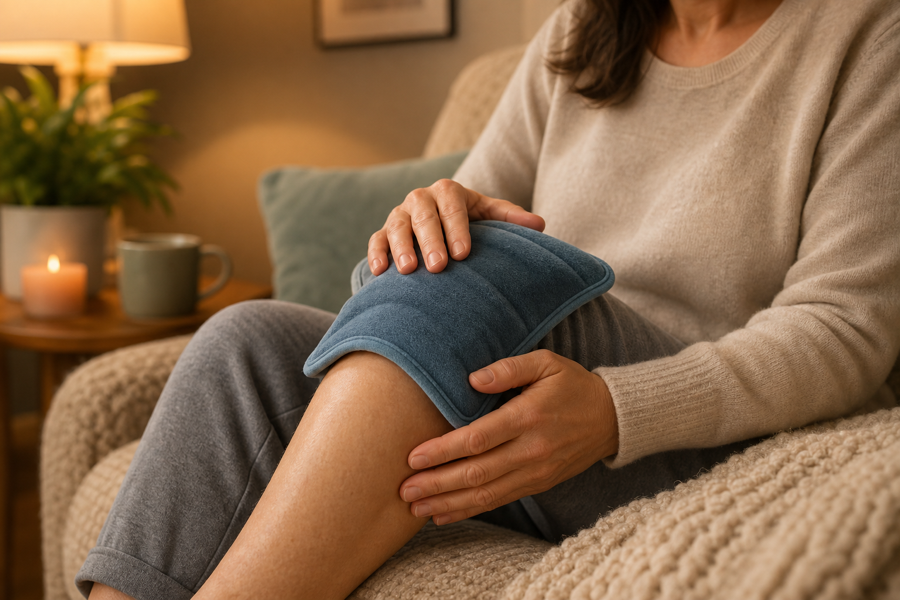
- Heat relaxes tight muscles and arthritic stiffness—avoid sleeping on heating pads.
- Ice calms fresh inflammation or acute flare-ups—limit skin time to avoid burns.
- When unsure, ask your clinician—neuropathy or vascular disease changes safety.
NSAIDs and older adults
Ibuprofen and naproxen help some pains but stress kidneys and stomach lining—especially alongside blood thinners. Acetaminophen helps some patterns but has its own liver dose ceilings. Your pharmacist + clinician pair beats internet stacking.
Mind-body tools that are not dismissive fluff
Guided relaxation, tai chi, yoga modified for chairs, and cognitive behavioral approaches for pain reduce suffering even when X-rays look the same. They train the nervous system’s volume knob—not “pretending it doesn’t hurt.”
When new pain is not “the usual”
Sudden severe back pain with numbness in the saddle area, new leg weakness, fever with spine pain, or chest pain need urgent evaluation—not home experiments.
Reviewed by A. Nguyen, MD · May 2026