Foot checks when you have diabetes
High glucose can dull sensation in feet while slowing healing. Small blisters become ulcers faster than many people expect—daily checks and proper shoes are cheap insurance.
The 30-second daily scan
- Wash feet lukewarm; test water with elbow if neuropathy suspected.
- Dry gently between toes—moisture breeds fungus.
- Look for cuts, color changes, swelling, or warm spots.
- Use a mirror or helper for soles if bending is hard.
Shoes: width, seams, and break-in honesty
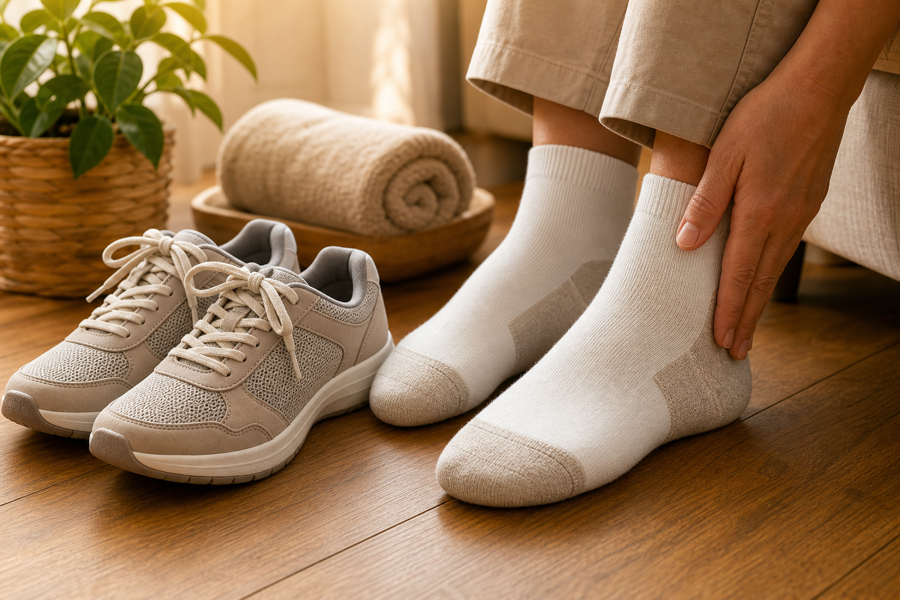
Buy late afternoon when feet swell slightly. Feel inside for seams that rub. Break in new shoes at home before long walks. White socks make drainage obvious early—some clinicians suggest them for high-risk feet.
Trim nails straight across
Rounded corners can encourage ingrown nails. If vision or tremor makes clipping unsafe, podiatry visits are not vanity—they are prevention.
Corns, calluses, and pharmacy “bathroom surgery”
Over-the-counter acid plasters can burn healthy skin if sensation is reduced. Ask a podiatrist before chemical corn removers—safer mechanical debridement often wins.
How this ties to glucose patterns
Better averages reduce complication rates over years, not hours. Pair foot care with meal patterns you can sustain and medication timing you actually follow.
Reviewed by A. Nguyen, MD · May 2026