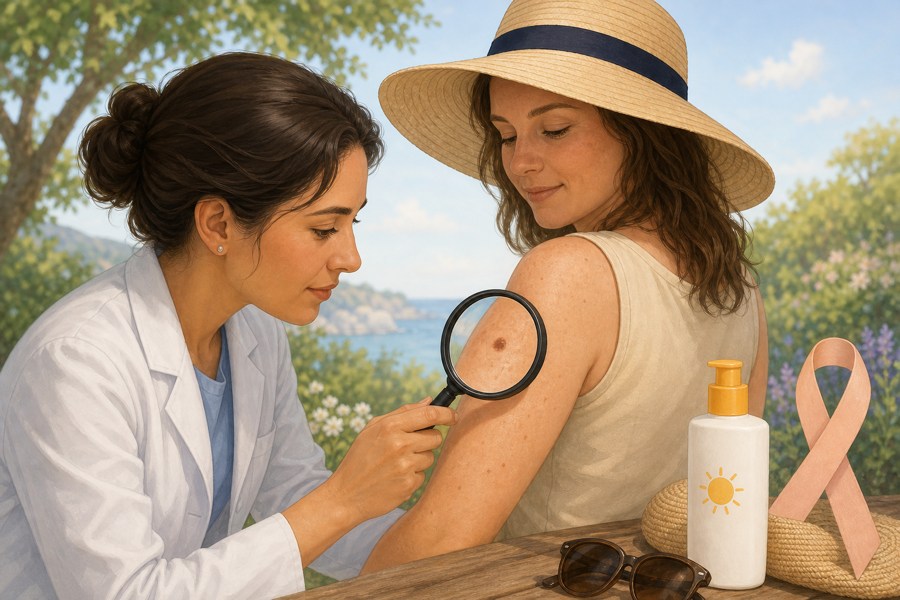
Skin spots: sunscreen habits and mole changes to mention
Skin cancer rates rise with cumulative sun and age, but early lesions are often treatable in outpatient settings. The win is noticing change early—not becoming anxious about every freckle.
ABCDE reminder (for pigmented spots)
- Asymmetry of shape
- Border irregularity
- Color variation within one spot
- Diameter growing
- Evolving over weeks to months
Non-melanoma cues that still deserve photos
Pink pearly bumps, scaly patches that never heal, or tender ulcers that bleed with minimal trauma warrant dermatology—not antibiotic cream alone for months.
Sunscreen that people actually wear
Broad-spectrum SPF 30+ on face, ears, neck, and backs of hands daily beats beach-only SPF 100 marathons. Reapply every two hours during outdoor work. Wide-brim hats protect scalps thinning hair.
Self-exam logistics
Use mirrors for back checks or a partner monthly. Phone photos dated month-to-month help you notice slow change without paranoia spirals.
Tanning beds
Indoor tanning raises melanoma risk—no age makes them “safe enough.” If you like the look, bronzing lotions or professional sprays (with allergy patch tests) are lesser evils—still discuss with dermatology if skin is sensitive.
Reviewed by A. Nguyen, MD · May 2026