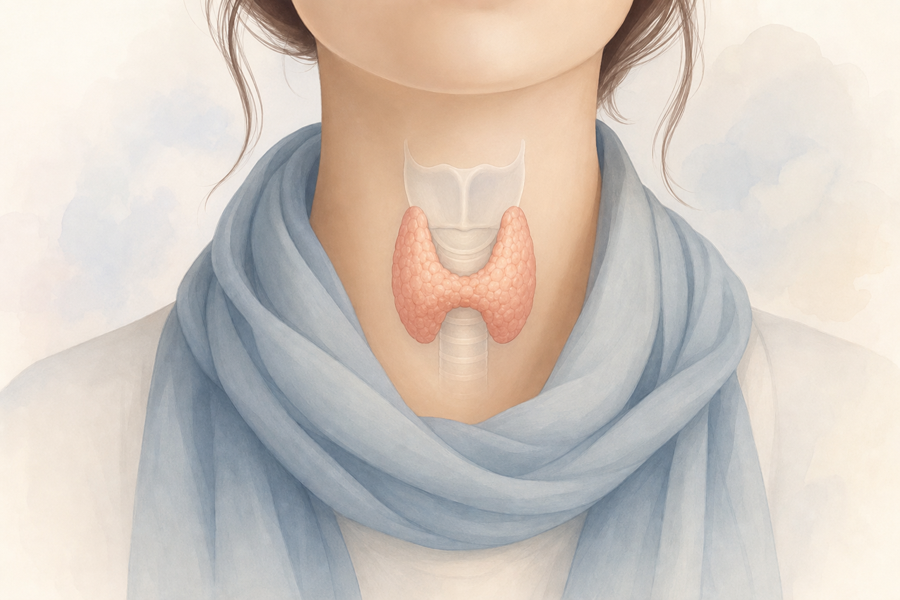
Thyroid symptoms older adults notice first
The thyroid gland sets a thermostat for metabolism. When it drifts high or low, symptoms overlap with sleep problems, heart rhythm changes, depression, or “just getting older”—which is why labs tell part of the story.
Hypothyroid (underactive): fatigue, cold, constipation
Sluggish thyroid can cause weight gain without overeating, dry skin, slower pulse, or higher cholesterol. Older adults sometimes show fewer classic signs—subtle apathy or falls from weakness. Replacement therapy, when indicated, starts low and titrates carefully to avoid stressing the heart.
Hyperthyroid (overactive): heat, tremor, weight loss
Unexplained weight loss with appetite, trembling hands, sweats, or palpitations deserves testing. Atrial fibrillation can appear—see our AFib overview if your pulse feels irregular.
Nodules: when worry is optional vs. mandatory
Many nodules are benign; ultrasound and periodic monitoring follow risk-based rules. Rapid growth, voice hoarseness, or hard fixed lumps should be reported promptly—not watched for six months in silence.
Supplements and “natural thyroid” internet cures
Desiccated thyroid from online sources varies in dose and purity. Do not stack iodine supplements hoping to “wake up” the gland—excess can hurt more than help.
Questions to bring
- Should I take my thyroid pill before labs—and same time daily?
- Could any of my heart meds interact with thyroid dose changes?
- What symptom changes should trigger a message between visits?
Reviewed by A. Nguyen, MD · May 2026