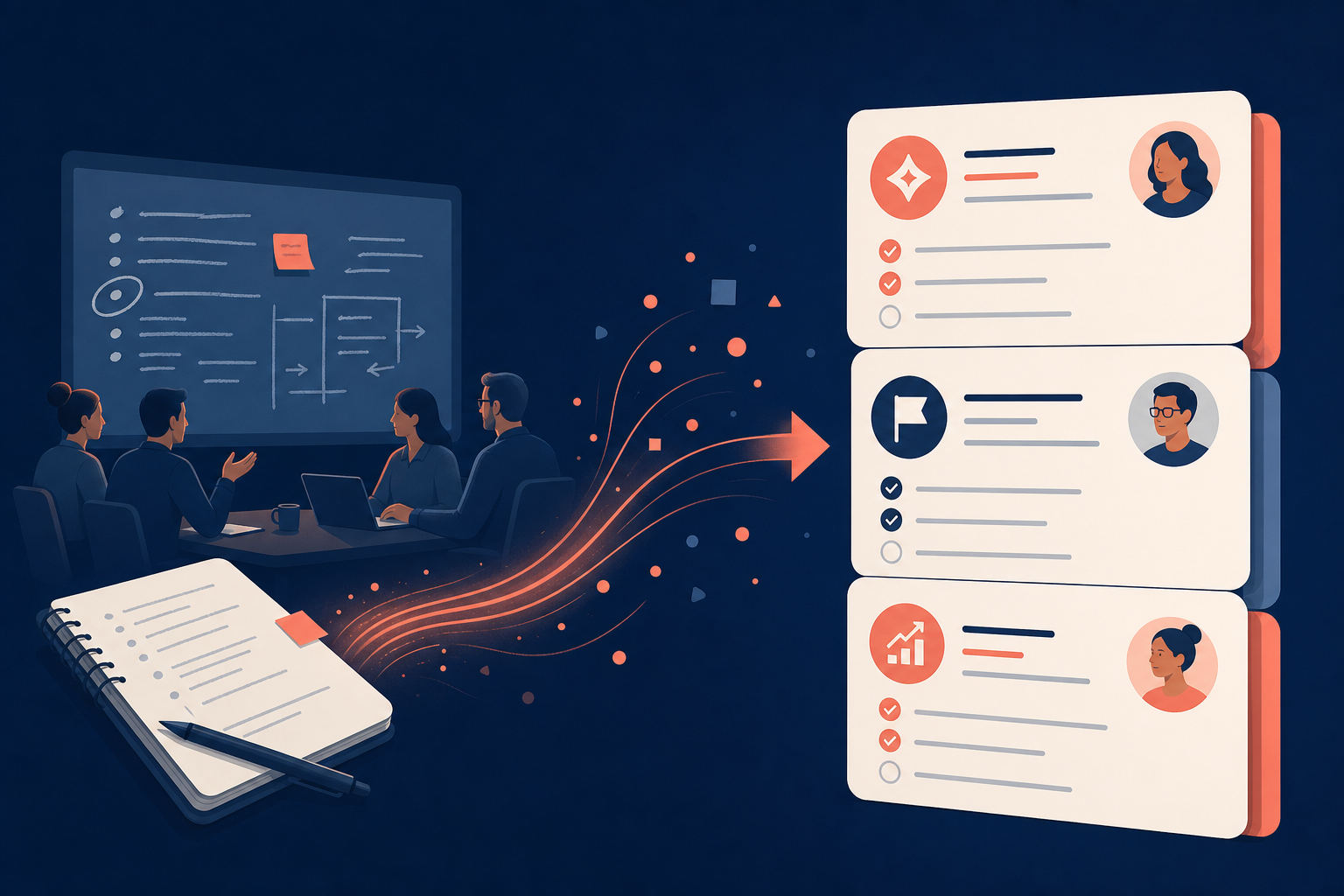
Workspace tools earn their place slowly, through better handoffs, clearer shared context, and fewer moments where teams have to reconstruct what just happened. Teams benefit most when meeting AI highlights commitments, risks, and open choices rather than just producing another searchable transcript.
A decision-memory system earns its place when a teammate can return days later and answer three questions quickly: what was decided, what still needs judgment, and who is carrying the next step. Without that, the transcript is just a longer archive.
Raw transcripts are useful, but decisions are what drive follow-through. Operators want memory systems that make action and accountability easier to recover later. That is why operators look past the surface interface quickly. What matters is whether the workspace helps teams coordinate work with less re-entry, less recap, and fewer duplicate systems.
Why operators care
The next wave of meeting products will be judged less by transcription quality and more by whether they preserve usable operating memory. The products that hold up best are usually the ones that tighten the connective tissue of work without forcing teams to abandon systems that already behave well.
- Can decisions, owners, and open questions be separated cleanly?
- Is follow-up easier than searching the raw transcript?
- Can meeting memory connect to projects, docs, or tickets downstream?
- Searchable transcripts with no decision layer
- Memory that cannot be corrected after the meeting
- No bridge from notes to accountable follow-through